



Where a dark patch hides in Hallandale Beach
Grid metering and thermal imaging, as in every tower, because the evidence sits inside an assembly. What is worth adding here is the pattern across units. Damage appearing on the same elevation across several floors points at the facade, damage in a vertical line points at a riser, and both of those are far more persuasive than one owner's readings. Coordinating a small number of unit inspections in the same building is usually the cheapest way to establish it.
That is the practical half of this job, because a great deal of what gets photographed and sent to us is not fungal growth at all. Soot deposition from candles, thermal ghosting in dark lines that follow the framing behind the drywall, and dirt staining at an air gap all look convincing and none of them are mold. Send a clear photograph with something in it for scale before you book and a fair number of these conversations end there, at no cost.
Where there is something genuinely growing, a tape lift takes about thirty seconds and the laboratory names the genus. What comes back also says whether the material has actually been colonised or has merely collected spores that arrived from elsewhere, and that distinction is worth more than the name: colonisation means the water is right there, while deposition means keep looking.
Here is the part usually left out. Identification frequently does not change the work. Remediation practice does not vary much by genus, so a result naming one organism and one naming another on the same square metre of wet drywall generally produce the same scope and the same price. Where the fee earns itself is when somebody is disputing that there is growth at all, when the area is large enough that the scope will be argued over, or when the question is whether the staining is fungal in the first place.
The commercial position in Hallandale Beach is the one published on every page of this site, because the rate card is not a Fort Lauderdale rate card. A flat price by property size, agreed before anyone drives out, with the accredited laboratory fee already inside it. It does not rise if the samples come back positive, nothing is added for the drive, and we take no payment of any kind from anyone who removes mold.
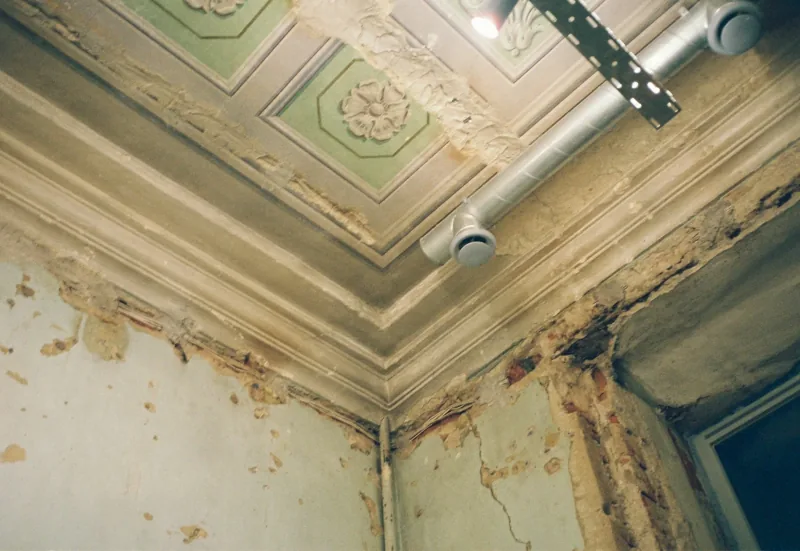
What Hallandale Beach itself changes
The buildings in Hallandale Beach
Hallandale Beach has 28,793 units at a 1975 median, with 58% of them in buildings of fifty units or more and only 9% single-family detached. That makes it one of the most condominium-dominated places in the county, and it pairs that with a median household income of $52,340, the lowest among the coastal tower towns. Those two facts together describe the assessment problem here precisely: the buildings are large, old and envelope-driven, and the money available to maintain them is tighter than in the towers immediately north.
Where the water comes from
The same driven-rain and salt mechanism as every oceanfront tower town, with one difference that matters. Where a building's reserve is under pressure, facade and window perimeter work gets deferred and patched rather than renewed, and a patched weather line admits water at a rate that is slow enough to be argued about. That produces the longest-running disputes we see: damage that is real, progressive and attributable to a common element, in a building where the repair keeps being postponed.
The cooling systems here
Older through-wall units in the original buildings and split systems where flats have been renovated, with the additional consideration that a high proportion of these units are seasonally occupied or let short-term. A flat that alternates between occupied and closed has a thermostat history that produces exactly the conditions growth wants, and it is frequently nobody's specific responsibility to manage that.