



How the cooling fails in Hillsboro Beach
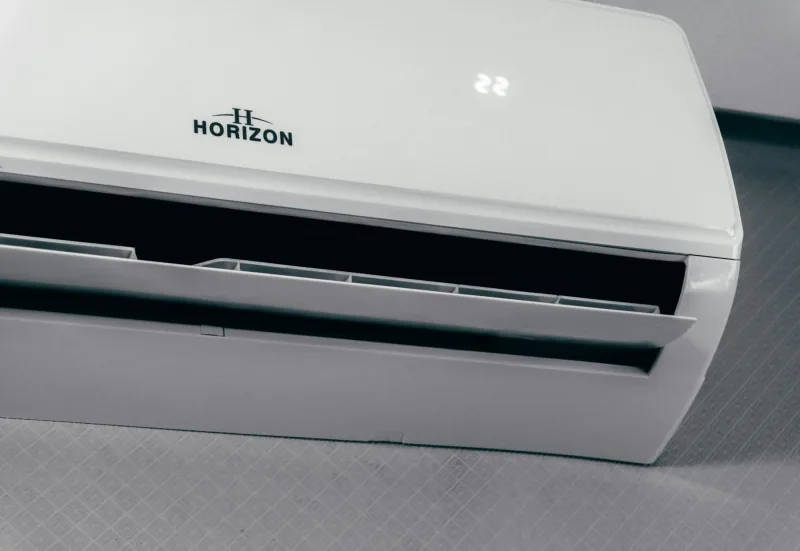
A mixture of original through-wall units and split systems retrofitted during refurbishments, and in a seasonally occupied tower the equipment matters less than how it is left. A unit shut up from May to October with the thermostat set high spends the entire wet season equalising with outdoor air at a dew point in the low seventies. That is the most common cause of growth in this town and it has nothing to do with the building failing.
Against that, one piece of building science is worth stating flatly because it is counter-intuitive enough to be missed: an oversized air conditioner dehumidifies worse than a correctly sized one, despite carrying more capacity on its nameplate.
The reason is timing. Moisture removal does not reach its full rate until roughly three minutes into a cooling cycle, because the coil has to get properly cold and wet before it strips much water out of the air crossing it. An oversized system reaches the setpoint and shuts off before it gets there. The house is cool. The house is also damp. The Florida Solar Energy Center put a worked figure on it: a building genuinely needing two tons, given four, is dehumidified worse by the larger machine despite twice the nameplate moisture capacity.
That is why so many of these calls in Hillsboro Beach describe a problem that started after new equipment was fitted. The other half of the job is more prosaic and more common still: the condensate line, which carries water just condensed out of warm humid air and closes gradually with biological growth until the pan overflows into a ceiling, a closet floor or a wall. It is the highest-frequency failure in this county and the cheapest to prevent.
The commercial position in Hillsboro Beach is the one published on every page of this site, because the rate card is not a Fort Lauderdale rate card. A flat price by property size, agreed before anyone drives out, with the accredited laboratory fee already inside it. It does not rise if the samples come back positive, nothing is added for the drive, and we take no payment of any kind from anyone who removes mold.
What Hillsboro Beach itself changes
The buildings in Hillsboro Beach
Hillsboro Beach is the most concentrated high-rise stock in Broward County: 67% of its 2,685 units sit in buildings of fifty or more, against a county figure of 17%, at a 1974 median and with 87% owner occupancy. The town is a narrow strip between the ocean and the Intracoastal, which means almost every building has salt-laden air on both elevations and no sheltered side at all. The stock is predominantly 1960s and 1970s oceanfront towers, and its problems are envelope problems rather than plumbing ones.
Where it hides in these buildings
Almost nothing here can be reached without somebody else's cooperation, which shapes the whole job. The evidence is inside a wall, on an elevation, or in a unit above. So the method is grid metering across the affected wall and ceiling to establish the gradient and therefore the direction of travel, thermal imaging to follow the cold path back, and reading that against the building's own construction. That produces a defensible statement about where the water entered without opening anything.
Licensing, and who signs it off
Mold assessment is licensed by the state rather than permitted by the town, which is the opposite of how plumbing or electrical work is handled here. No Broward municipality issues a mold permit or keeps a mold register: the assessor licence comes from the Florida Department of Business and Professional Regulation under Chapter 468 Part XVI, it is searchable on the state register, and section 468.8419 bars the holder from remediating a structure they assessed within twelve months. That is identical at every address in the county and we will say so rather than inventing a local office. In a town this condominium-heavy the practical question is nearly always the unit boundary, because a facade, a parapet and a riser are association responsibilities and the damage is inside somebody's flat.