



How the cooling fails in Southwest Ranches
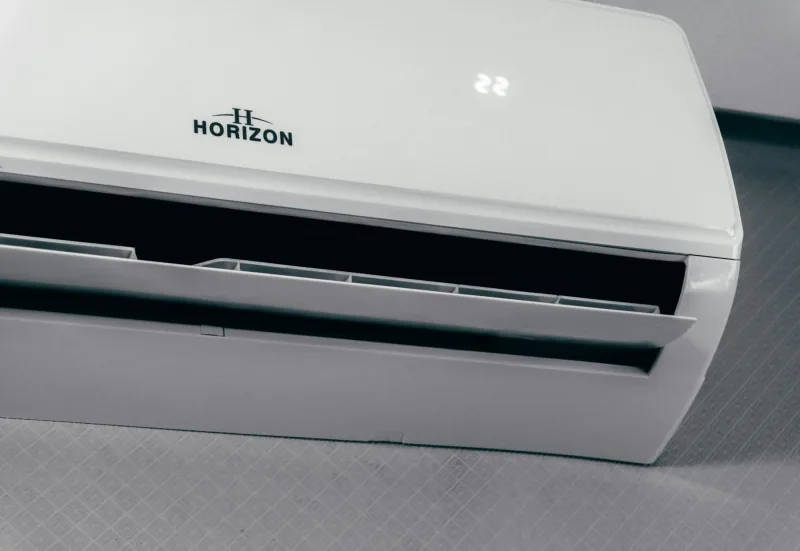
Split systems on the houses, often several per property given the floor areas involved, and frequently an entirely separate arrangement for any outbuilding. The intermittently conditioned building is the one to look at: a structure that is cooled when somebody is using it and left closed the rest of the time cycles through condensation repeatedly, which is worse for the building than never cooling it at all.
Against that, one piece of building science is worth stating flatly because it is counter-intuitive enough to be missed: an oversized air conditioner dehumidifies worse than a correctly sized one, despite carrying more capacity on its nameplate.
The reason is timing. Moisture removal does not reach its full rate until roughly three minutes into a cooling cycle, because the coil has to get properly cold and wet before it strips much water out of the air crossing it. An oversized system reaches the setpoint and shuts off before it gets there. The house is cool. The house is also damp. The Florida Solar Energy Center put a worked figure on it: a building genuinely needing two tons, given four, is dehumidified worse by the larger machine despite twice the nameplate moisture capacity.
That is why so many of these calls in Southwest Ranches describe a problem that started after new equipment was fitted. The other half of the job is more prosaic and more common still: the condensate line, which carries water just condensed out of warm humid air and closes gradually with biological growth until the pan overflows into a ceiling, a closet floor or a wall. It is the highest-frequency failure in this county and the cheapest to prevent.
The commercial position in Southwest Ranches is the one published on every page of this site, because the rate card is not a Fort Lauderdale rate card. A flat price by property size, agreed before anyone drives out, with the accredited laboratory fee already inside it. It does not rise if the samples come back positive, nothing is added for the drive, and we take no payment of any kind from anyone who removes mold.
What Southwest Ranches itself changes
The buildings in Southwest Ranches
Southwest Ranches is the least dense municipality in Broward County and among the least dense in South Florida: 2,322 housing units, 98% of them single-family detached and 96% owner-occupied, at a 1982 median. The town was incorporated specifically to preserve large-lot rural living, and the typical property is a house on an acre or more with outbuildings, frequently stables or a barn, and a good deal of the parcel unpaved. Nothing about it resembles the rest of the county.
Where it hides in these buildings
The parcel is part of the inspection here rather than background to it. Outbuildings, tack rooms, converted stables and guest accommodation are frequently in use and frequently unconditioned or intermittently conditioned, which makes them the likeliest place on a property for growth to establish. They are also routinely left out of an inspection brief. We ask what is on the parcel before quoting rather than discovering a second building on arrival.
Licensing, and who signs it off
Mold assessment is licensed by the state rather than permitted by the town, which is the opposite of how plumbing or electrical work is handled here. No Broward municipality issues a mold permit or keeps a mold register: the assessor licence comes from the Florida Department of Business and Professional Regulation under Chapter 468 Part XVI, it is searchable on the state register, and section 468.8419 bars the holder from remediating a structure they assessed within twelve months. That is identical at every address in the county and we will say so rather than inventing a local office. What Southwest Ranches adds is scope rather than regulation. Pricing and method here follow from how many separate structures are conditioned on the parcel, and we establish that on the phone rather than on the day.