



What the equipment in Southwest Ranches can and cannot remove
Split systems on the houses, often several per property given the floor areas involved, and frequently an entirely separate arrangement for any outbuilding. The intermittently conditioned building is the one to look at: a structure that is cooled when somebody is using it and left closed the rest of the time cycles through condensation repeatedly, which is worse for the building than never cooling it at all.
The reason that matters is a gap between two numbers, both from the Florida Solar Energy Center at the University of Central Florida. Through the hot months, with cooling running, indoor relative humidity should not exceed 55% during the day on a regular basis. And the great majority of mold species need a material moisture content corresponding to a relative humidity of at least 70% to grow at all.
Note where that second number is measured. Not in the room. At the material. Air holds less moisture as it cools, so the film of air against a chilled surface sits at a far higher relative humidity than the room average. A wall at 68F with 78F room air at 55% is close to saturation at its own face, and it does not need a leak to get there. That is the mechanism behind almost every complaint where nobody can find a source.
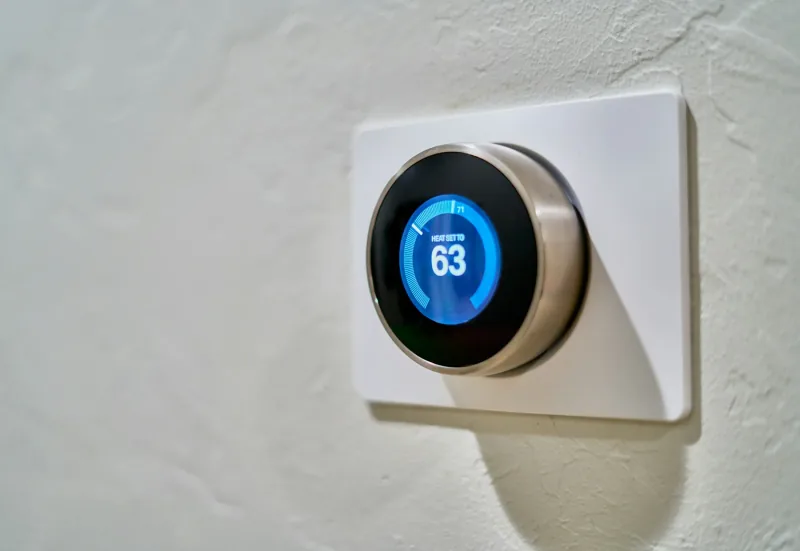
So in Southwest Ranches we read surface temperatures with an infrared thermometer alongside the room air, calculate the dew point of that air, and record the margin at every surface that has one worth recording. FSEC also give the point at which cooling alone stops being enough: sustained readings of 70 to 75% mean dehumidification rather than a colder thermostat, and turning the thermostat down at that stage chills the surfaces further and makes it worse.
The commercial position in Southwest Ranches is the one published on every page of this site, because the rate card is not a Fort Lauderdale rate card. A flat price by property size, agreed before anyone drives out, with the accredited laboratory fee already inside it. It does not rise if the samples come back positive, nothing is added for the drive, and we take no payment of any kind from anyone who removes mold.
What Southwest Ranches itself changes
The buildings in Southwest Ranches
Southwest Ranches is the least dense municipality in Broward County and among the least dense in South Florida: 2,322 housing units, 98% of them single-family detached and 96% owner-occupied, at a 1982 median. The town was incorporated specifically to preserve large-lot rural living, and the typical property is a house on an acre or more with outbuildings, frequently stables or a barn, and a good deal of the parcel unpaved. Nothing about it resembles the rest of the county.
Where the water comes from
Water here is not municipal in the way it is elsewhere. A substantial share of properties are on private wells and septic systems, which introduces two questions no other town in this service area raises: whether a septic drainfield is functioning, since a failing one saturates ground close to a building, and what the well water itself is doing to any equipment it passes through. Combined with a water table held close to the surface at the conservation boundary, the ground around a Southwest Ranches house is wetter than almost anywhere else in Broward.
Where it hides in these buildings
The parcel is part of the inspection here rather than background to it. Outbuildings, tack rooms, converted stables and guest accommodation are frequently in use and frequently unconditioned or intermittently conditioned, which makes them the likeliest place on a property for growth to establish. They are also routinely left out of an inspection brief. We ask what is on the parcel before quoting rather than discovering a second building on arrival.