



What the equipment in Coral Springs can and cannot remove
Split systems with the air handler in a garage or interior closet and a long run of flexible duct across the attic to reach the far bedrooms. That duct is the equipment most likely to be the problem in Coral Springs, because a run that has slipped its insulation or been compressed against a truss will condense along its whole length in August. The system itself is usually the third generation on the house and, as everywhere in the county, frequently sized by replacement rather than by calculation.
The reason that matters is a gap between two numbers, both from the Florida Solar Energy Center at the University of Central Florida. Through the hot months, with cooling running, indoor relative humidity should not exceed 55% during the day on a regular basis. And the great majority of mold species need a material moisture content corresponding to a relative humidity of at least 70% to grow at all.
Note where that second number is measured. Not in the room. At the material. Air holds less moisture as it cools, so the film of air against a chilled surface sits at a far higher relative humidity than the room average. A wall at 68F with 78F room air at 55% is close to saturation at its own face, and it does not need a leak to get there. That is the mechanism behind almost every complaint where nobody can find a source.
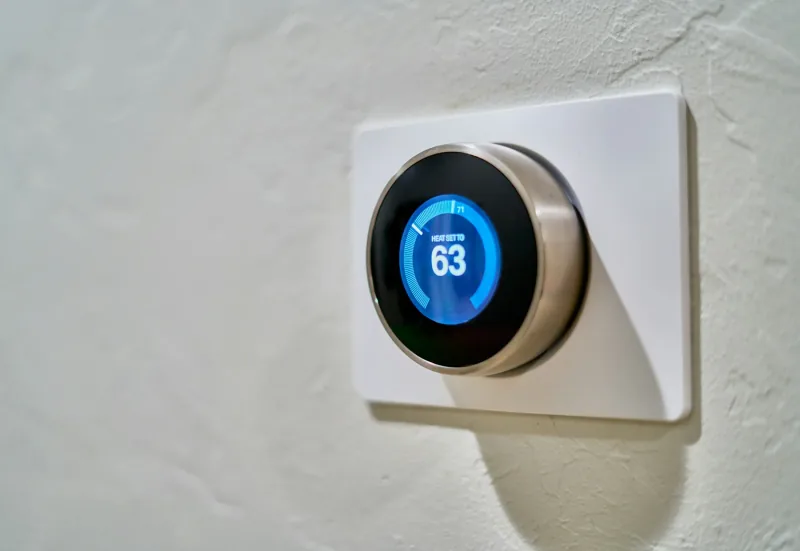
So in Coral Springs we read surface temperatures with an infrared thermometer alongside the room air, calculate the dew point of that air, and record the margin at every surface that has one worth recording. FSEC also give the point at which cooling alone stops being enough: sustained readings of 70 to 75% mean dehumidification rather than a colder thermostat, and turning the thermostat down at that stage chills the surfaces further and makes it worse.
The commercial position in Coral Springs is the one published on every page of this site, because the rate card is not a Fort Lauderdale rate card. A flat price by property size, agreed before anyone drives out, with the accredited laboratory fee already inside it. It does not rise if the samples come back positive, nothing is added for the drive, and we take no payment of any kind from anyone who removes mold.
What Coral Springs itself changes
The buildings in Coral Springs
Coral Springs is a master-planned city with a median build year of 1987 across 47,770 units, 49% of them single-family detached. Building of that vintage and that consistency produces a useful diagnostic advantage: the houses are genuinely comparable, so a property behaving differently from its neighbours is telling you something specific rather than reflecting a different building age. The characteristic construction is concrete block with stucco under a tile roof over a vented attic, and the vented attic is the part that matters most. It is a hot, humid space directly above the conditioned rooms, and every duct run and every ceiling penetration works across that boundary.
Where the water comes from
Water reaches the building here from above far more often than from below. Tile roofing relies on an underlayment rather than on the tile itself for waterproofing, and by the late 2020s a 1987 roof is on its second or third underlayment if it has been looked after and its first if it has not. A failure there is slow, produces no visible drip for a long time, and wets the top of a ceiling assembly where nobody goes. The other route is condensation on attic ductwork, which is not a leak at all but leaves exactly the same stain.
Where it hides in these buildings
The attic is where this town hides its problems and it is the place a general inspection spends the least time. Duct runs sagging between supports collect condensate at the low point. Insulation that has been walked on no longer covers the metal underneath it. Ceiling penetrations for lights and fans let conditioned air up and humid attic air down. None of it is visible from below until a stain appears, and by then the assembly above has been wet for months.