



What the equipment in Margate can and cannot remove
The original duct system is the thing to examine in Margate. Fibrous duct board and flexible duct of the 1970s were made to a specification that assumed a service life shorter than the one they have had, and in a vented attic at Florida temperatures the insulation degrades, the vapour barrier splits and the inner liner absorbs. Where that liner has been wetted, it cannot be cleaned: the moisture is inside the material. That is a replacement rather than a cleaning, and a cleaning quote for it is money spent on the wrong job.
The reason that matters is a gap between two numbers, both from the Florida Solar Energy Center at the University of Central Florida. Through the hot months, with cooling running, indoor relative humidity should not exceed 55% during the day on a regular basis. And the great majority of mold species need a material moisture content corresponding to a relative humidity of at least 70% to grow at all.
Note where that second number is measured. Not in the room. At the material. Air holds less moisture as it cools, so the film of air against a chilled surface sits at a far higher relative humidity than the room average. A wall at 68F with 78F room air at 55% is close to saturation at its own face, and it does not need a leak to get there. That is the mechanism behind almost every complaint where nobody can find a source.
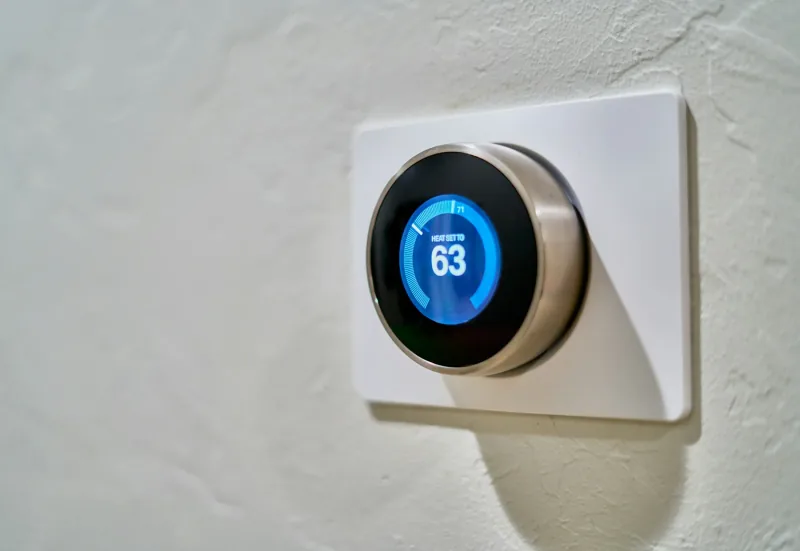
So in Margate we read surface temperatures with an infrared thermometer alongside the room air, calculate the dew point of that air, and record the margin at every surface that has one worth recording. FSEC also give the point at which cooling alone stops being enough: sustained readings of 70 to 75% mean dehumidification rather than a colder thermostat, and turning the thermostat down at that stage chills the surfaces further and makes it worse.
The commercial position in Margate is the one published on every page of this site, because the rate card is not a Fort Lauderdale rate card. A flat price by property size, agreed before anyone drives out, with the accredited laboratory fee already inside it. It does not rise if the samples come back positive, nothing is added for the drive, and we take no payment of any kind from anyone who removes mold.
What Margate itself changes
The buildings in Margate
Margate is a town of long-tenure owners in original houses: 77% owner-occupied across 26,356 units at a 1978 median, with 44% single-family detached. That combination produces a distinctive pattern. Where a rental market churns and forces periodic refurbishment, an owner-occupied 1970s house gets maintained rather than renewed, and maintenance concentrates on the things that stop working. Air conditioning stops working, so it gets replaced. Ductwork does not stop working in any way anybody notices, so it is still the original.
Where the water comes from
Ordinary central Broward conditions: no coast, no salt, a flat site and a shallow water table under the whole town. What distinguishes Margate on the water side is roof age rather than anything geographic. A 1978 house is on its second or third roof covering, and each replacement is a moment at which the interface between roof and wall, or roof and vent penetration, was either detailed properly or was not. Those details fail quietly, decades later, into a ceiling assembly.
Where it hides in these buildings
Single-storey slab houses with attic air handlers, so the two places worth reaching are the attic and behind the fitted furniture at exterior wall bases. In a house where the same family has been for thirty years, the second of those matters more than usual: furniture has not moved in a long time, and the surface behind a wardrobe that has stood against an exterior wall since the 1990s is the least ventilated surface in the building.